The short version:
- The 20 August 2026 Black Myth: Zhong Kui gameplay video shows buildings that resemble two real Shanxi monuments: 中里庄八龙寺塔 (Zhonglizhuang Balongsi Pagoda) in Wanrong County and 灵石后土庙 (Lingshi Houtu Temple) in Lingshi County.
- Neither match has been confirmed by Game Science; both are visual comparisons reported by heritage observers and Chinese media.
- Both are nationally protected sites, while Shanxi's established heritage routes can be travelled now without waiting for the game.
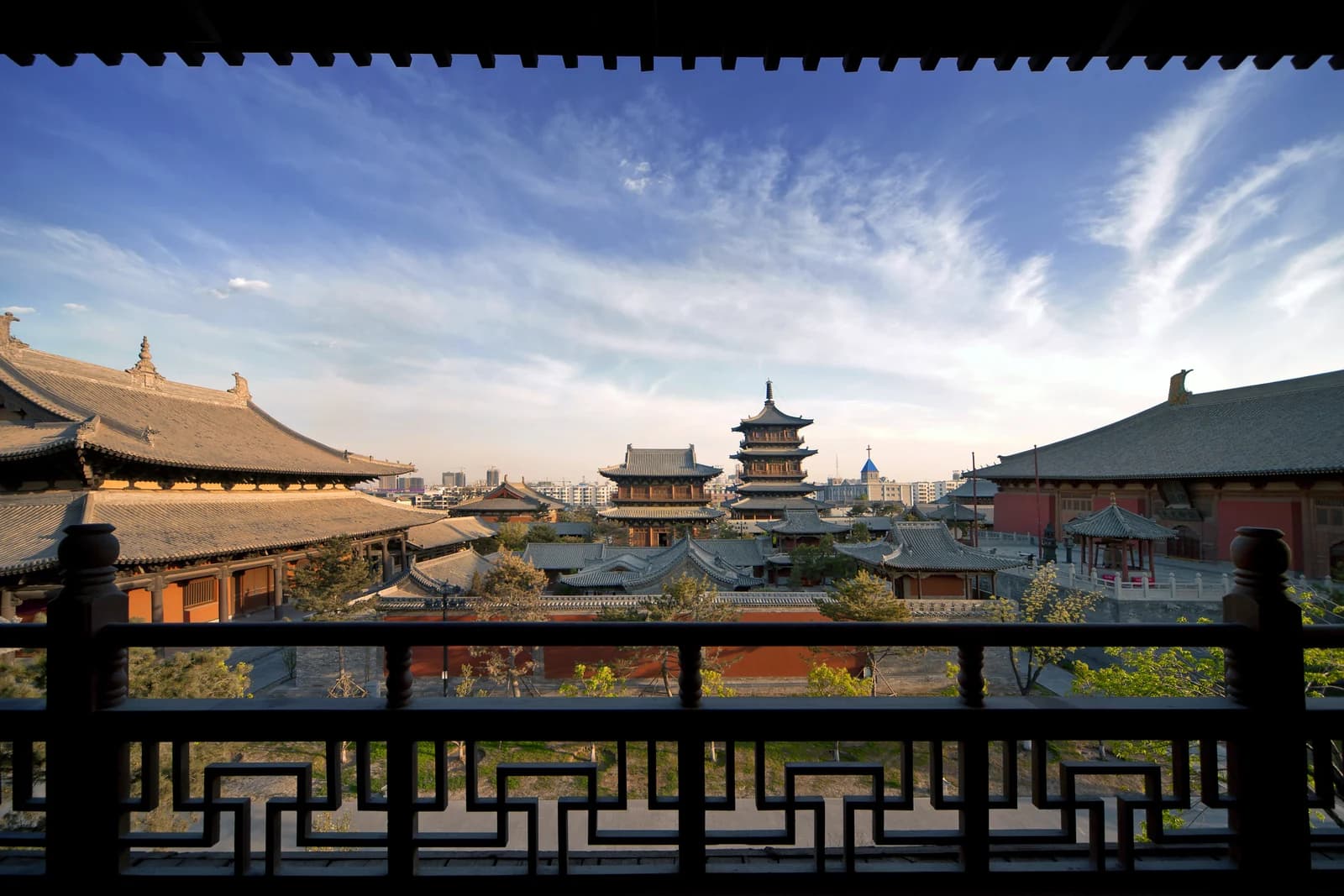
When Game Science released a new 15-minute gameplay demonstration for Black Myth: Zhong Kui on 20 August 2026, most viewers focused on its sword fights, supernatural characters and shadow-filled landscapes. Admirers of Chinese architecture noticed something else: buildings that appeared to carry the weathered forms of real monuments.
Within days, researchers and heritage enthusiasts had proposed several possible sources. Two of the strongest suggestions are in Shanxi: 中里庄八龙寺塔 (Zhonglizhuang Balongsi Pagoda) in Wanrong County and 灵石后土庙 (Lingshi Houtu Temple) in Lingshi County. Both are nationally protected historic monuments. Both also possess the kind of age, texture and rural atmosphere that cannot be reproduced by adding a few decorative roofs to a generic fantasy landscape.
There is an important distinction, however. Game Science has not published a location list for Black Myth: Zhong Kui, and it has not confirmed either Shanxi monument as a scanning or reference site. The identifications discussed here are visual comparisons reported by heritage observers and Chinese media, not official announcements.
That uncertainty does not make the buildings less interesting. On the contrary, it offers a reason to look beyond the game and understand why Shanxi has become so important to the visual language of the Black Myth series.
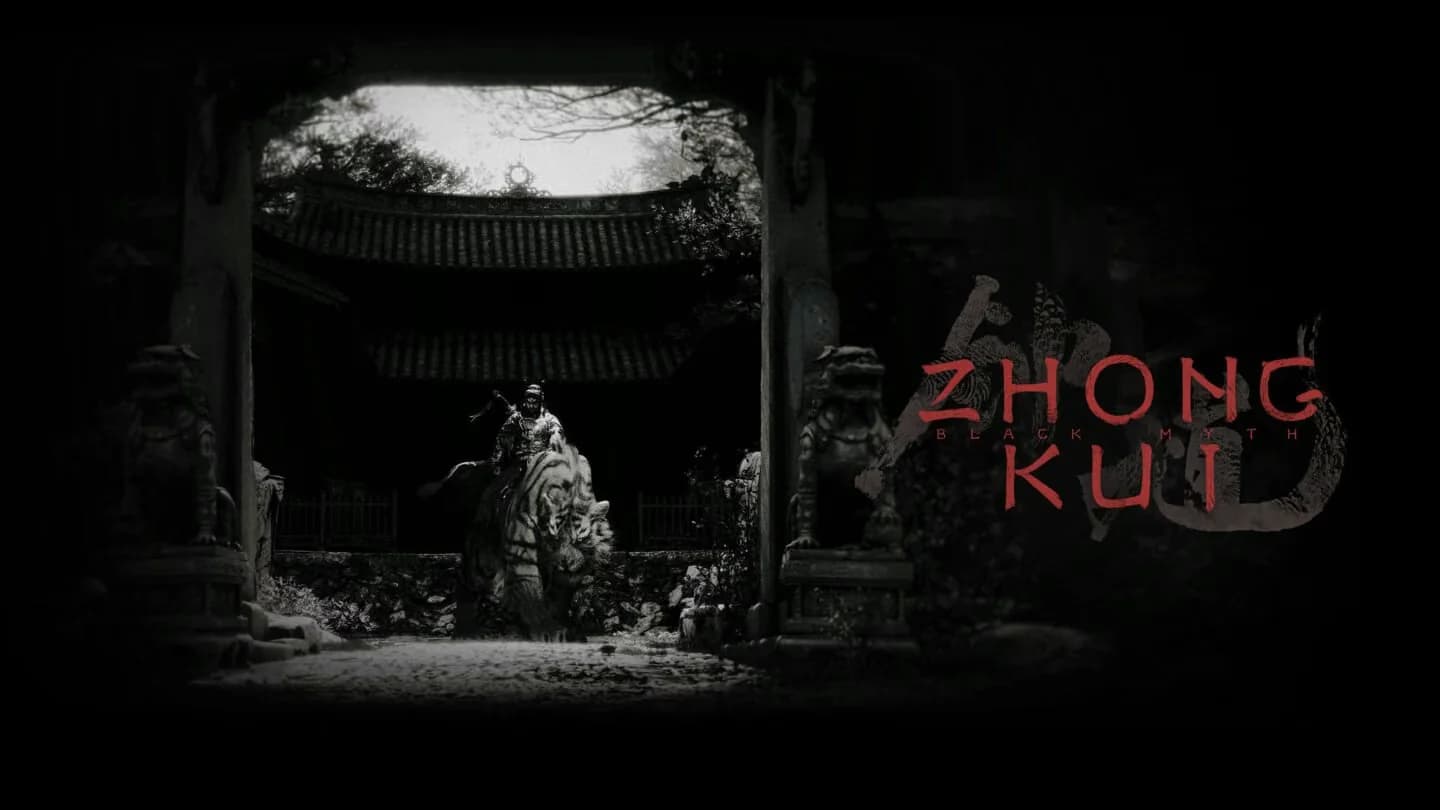
What the official Zhong Kui demonstration confirms
The official video describes Black Myth: Zhong Kui as the second title in the Black Myth series and says that the new footage shows combat by the protagonist and parts of the story. It was recorded from a version still in development. Game Science also cautions that the project remains at an early stage and that the final release may differ.
No release date has been announced. More importantly for travellers, neither the official game page nor the official gameplay video names the architectural locations seen on screen.
Current discussions therefore fall into three evidence levels:
- Official: the game, its theme, the development footage and its publication date.
- Strong visual comparison: buildings whose forms closely resemble known monuments.
- Speculation: claims about plot, characters, exact locations or future travel routes that have not been verified.
For the moment, the two Shanxi sites belong in the second category.
Possible Shanxi location one: 中里庄八龙寺塔 (Zhonglizhuang Balongsi Pagoda)
One scene in the gameplay shows a solitary square pagoda rising above an austere rural landscape. Its proportions, layered brick eaves and isolated setting have led observers to compare it with 中里庄八龙寺塔 (Zhonglizhuang Balongsi Pagoda) in Wanrong County, in southern Shanxi.
China's official register identifies Zhonglizhuang Balongsi Pagoda as a Song-period monument and a Major Historical and Cultural Site Protected at the National Level. Media comparisons describe it as a multi-storey, solid brick, pavilion-style pagoda. Brickwork beneath the eaves imitates elements that would normally be made in timber, allowing the tower to preserve the visual grammar of wooden architecture in masonry.
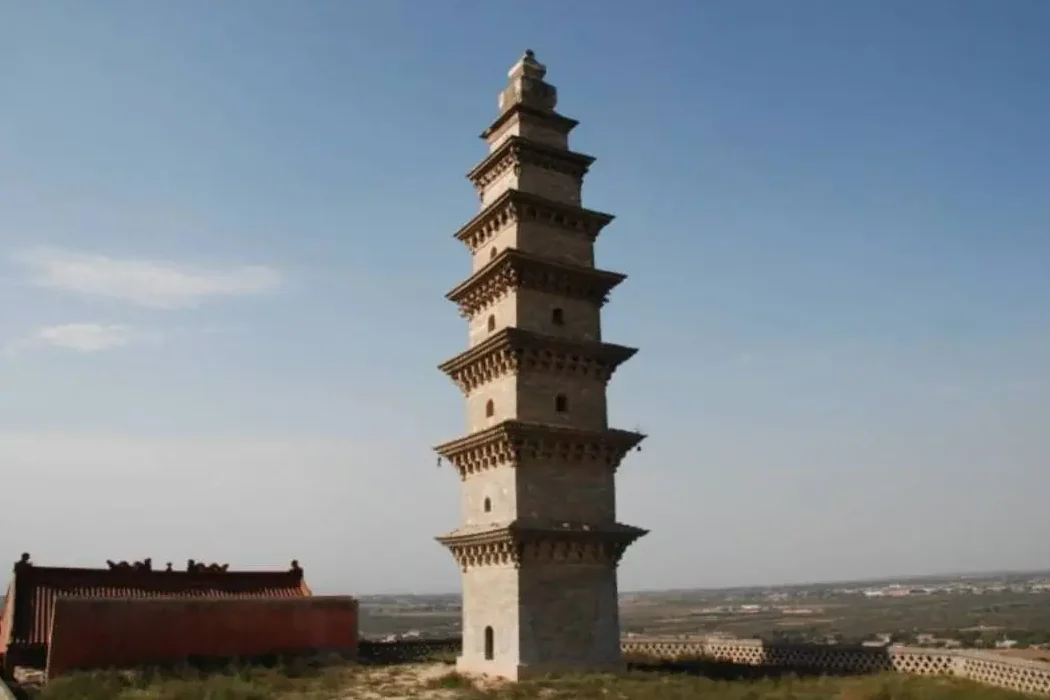
The surrounding temple has not survived intact. The tower now stands with a degree of isolation, its masonry marked by centuries of exposure and repair. That condition may be precisely what made viewers connect it with Zhong Kui. It does not look like a polished fantasy palace. It looks like a structure that has remained after its original world changed around it.
Wanrong is already part of the wider Black Myth geography. The county is also home to 万荣飞云楼 (Wanrong Feiyun Tower) and 万荣后土祠 (Wanrong Houtu Shrine) by the Yellow River, both associated with Shanxi's Black Myth: Wukong travel story. Yet Zhonglizhuang Balongsi Pagoda remains much less familiar to international visitors.
This is not currently a conventional attraction with predictable visitor services. Anyone considering a visit should check access, road conditions and conservation work with the appropriate local authority rather than treating a social-media identification as a travel guarantee.
Possible Shanxi location two: 灵石后土庙 (Lingshi Houtu Temple)
A second architectural clue appears in a pavilion-like structure with a compact roof and dense bracket work. Commentators have compared it with the offering hall at 灵石后土庙 (Lingshi Houtu Temple), near the better-known 王家大院 (Wang Family Compound).
The official national heritage register classifies Lingshi Houtu Temple as a Yuan-period monument. Its surviving architectural core includes an offering hall and main hall. The offering hall is especially memorable: a square, open structure whose brackets and angled beams turn inward to form an intricate octagonal ceiling system.
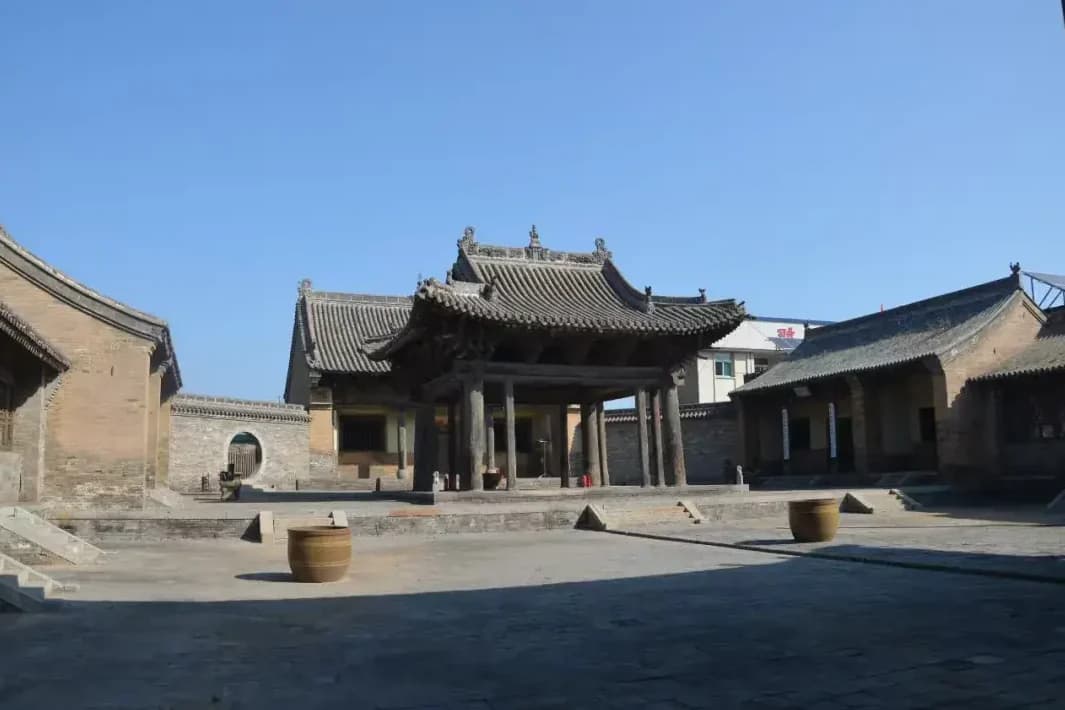
To a visitor unfamiliar with Chinese timber architecture, the building may initially appear small. Its importance lies not in scale but in construction. Columns, bracket sets, beams and roof are organised as a visible structural system. Ornament and engineering are not separate layers. The beauty comes from the way the building carries its own weight.
The comparison with the game is plausible, but it is not conclusive. Other Shanxi buildings—including an offering hall at 马和晋祠 (Mahe Jinci Temple) in Lingshi—share related forms. Game environments can also combine scans, photographs and design elements from multiple places. The safest conclusion is therefore that the footage appears to draw on the architectural language of this group of Shanxi monuments, with Lingshi Houtu Temple among the strongest proposed matches.
As with Zhonglizhuang Balongsi Pagoda, current opening arrangements should be confirmed locally before travel. National protection does not necessarily mean that a monument operates as a fully staffed tourist attraction.
Why Shanxi keeps appearing in the world of Black Myth
The connection is not accidental. Shanxi preserves one of the densest and most historically continuous collections of traditional architecture in China.
According to China's Ministry of Culture and Tourism, the province has 53,875 registered immovable cultural relics, including 28,027 historic buildings. It also has 531 Major Historical and Cultural Sites Protected at the National Level. Across the province, visitors can compare timber construction from the Tang, Five Dynasties, Liao, Song, Jin, Yuan, Ming and Qing periods without reducing Chinese architecture to a single timeless style.
This chronological depth gives artists and game designers something that a newly built studio set cannot provide. A Tang hall is not simply an older version of a Ming hall. Its column spacing, bracket proportions, roof profile and relationship to sculpture reveal a different architectural world. Shanxi also preserves temples in which buildings, painted sculpture, murals, inscriptions and ritual space still belong to the same physical setting.
The effect is particularly suited to Black Myth. The games do not present Chinese tradition as a clean collection of museum objects. Their worlds are layered, damaged, inhabited and morally uncertain. Shanxi's surviving temples and towers carry visible histories of worship, rebuilding, abandonment and repair. They give fantasy a material memory.
For travellers, that is the deeper attraction. A visit to Shanxi is not simply an opportunity to reproduce a screenshot. It is a chance to understand why these forms have such power on screen.
Before Zhong Kui, Wukong turned digital scenery into real journeys
The travel potential of this relationship was demonstrated by Black Myth: Wukong.
Chinese government and cultural-tourism sources reported that 27 of the 36 identified domestic reference locations associated with the game were in Shanxi. They included monuments across Datong, Shuozhou, Xinzhou, Jinzhong, Changzhi, Jincheng, Linfen and Yuncheng.
The response was measurable. China's Ministry of Culture and Tourism reported that, in less than two months after the “Travel Shanxi with Wukong” campaign began, the 27 related heritage attractions received 5.3692 million visits and generated CNY 166 million in ticket revenue. Online topics connecting Wukong, Shanxi and ancient architecture accumulated more than ten billion views.
The most important result was not that every player became an architectural historian. It was that places previously known mainly to specialists entered the travel imagination of a much larger public. Visitors began asking why so many early wooden buildings survived in Shanxi, how bracket sets work and where the sculptural models behind game characters could be seen.
Zhong Kui may create a similar wave of curiosity, although it is too early to predict its scale. The game remains in development, the location research is incomplete, and the two possible Shanxi references discussed above are not official. What Wukong has already proved is that digital attention can become real cultural travel when visitors are given reliable context and practical ways to explore.
What international travellers can visit in Shanxi now
Travellers do not need to wait for Zhong Kui to discover the architectural world behind the series. Several of Shanxi's most significant monuments are established heritage destinations and can be connected in a journey through northern Shanxi.
佛光寺 (Foguang Temple)
佛光寺 (Foguang Temple) contains 佛光寺东大殿 (the East Hall of Foguang Temple), dated to the Tang dynasty. Its timber structure, sculpture, murals and inscriptions make it one of the essential monuments for understanding early Chinese architecture. Rather than viewing a reconstructed “ancient-style” building, visitors stand inside a hall whose fabric has survived for more than a millennium.
应县木塔 (Yingxian Wooden Pagoda)
The 应县木塔 (Yingxian Wooden Pagoda) rises through a complex system of timber columns, beams and bracket sets. Built in the Liao period, it is the tallest surviving all-timber pagoda in the world. Its structural scale is difficult to grasp through photographs alone; the surrounding town makes the tower's height even more dramatic.
悬空寺 (Hanging Temple)
At 悬空寺 (Hanging Temple), a compact religious complex occupies the face of a cliff near 恒山 (Mount Heng). Its narrow galleries and vertical setting have made it one of Shanxi's most recognisable monuments. Upper-level entry is capacity-controlled, so travellers should never assume that access can be guaranteed.
云冈石窟 (Yungang Grottoes)
The 云冈石窟 (Yungang Grottoes) near Datong shift the story from timber to stone. Their monumental fifth-century Buddhist sculptures reflect the Northern Wei capital's political ambition and the movement of artistic ideas across Asia. For international visitors, Yungang is also an important reminder that Shanxi's heritage extends beyond buildings to complete sacred landscapes.
大同华严寺与善化寺 (Huayan and Shanhua Temples in Datong)
大同华严寺 (Huayan Temple) and 大同善化寺 (Shanhua Temple) preserve major Liao and Jin architecture and sacred art within the old city. Seen after Foguang Temple and Yingxian Wooden Pagoda, they help visitors recognise how timber construction changed across centuries rather than treating every curved roof as the same architectural style.
Together, these places form a more rewarding journey than a checklist of game screenshots. They show the historical systems from which the visual world of Black Myth draws much of its authority.
From screen to site: travelling with context
Interest generated by games can help lesser-known monuments, but sudden popularity also creates risks. Many historic buildings have limited capacity. Some contain fragile murals or sculpture; others are managed by small local teams and may open only under particular conditions. Rural roads, seasonal weather and conservation work can change what is practical.
Responsible travel begins with a few principles:
- Treat proposed Zhong Kui locations as research leads until Game Science confirms them.
- Verify opening arrangements shortly before travelling.
- Follow photography restrictions, especially around murals, painted sculpture and cave art.
- Do not climb, touch or stage props against historic structures.
- Allow time to study a building instead of arriving only to reproduce a camera angle.
- Use informed local interpretation to distinguish original fabric from later restoration.
This approach does not reduce the pleasure of following a game into the real world. It makes the encounter richer. The screen provides the invitation; the surviving monument provides the evidence.
Explore the architecture behind the Black Myth phenomenon
Heritage Shanxi's five-day northern route connects Tang timber halls, the Liao-period 应县木塔 (Yingxian Wooden Pagoda), 悬空寺 (Hanging Temple), 云冈石窟 (Yungang Grottoes) and the Buddhist architecture of Datong.
Explore our five-day journey through northern Shanxi
Travellers with a particular interest in Black Myth, architectural photography, Buddhist art or lesser-known monuments can also begin with a private planning conversation. Access, transport and operating responsibilities are checked before any route is presented as confirmed.
Discuss a private journey in Shanxi
For practical preparation, read our guides to reaching Taiyuan and China's current entry and visa rules.
Sources and further reading
- Game Science: Black Myth: Zhong Kui official page
- Black Myth official account: 15-minute gameplay demonstration
- Cover News: proposed ancient-building references in the Zhong Kui demonstration
- State Council list of Major Historical and Cultural Sites Protected at the National Level
- State Council notice publishing the sixth national heritage list
- Ministry of Culture and Tourism: making the Wukong effect sustainable
- Datong Municipal Government: six Wukong locations in Datong
Frequently asked questions
Are Zhonglizhuang Balongsi Pagoda and Lingshi Houtu Temple confirmed Zhong Kui locations?
No. They are strong visual comparisons proposed by heritage observers and reported by Chinese media. As of 26 August 2026, Game Science has not published an official location list or confirmed either monument as a scanning site.
Can international travellers visit the two possible locations?
Their status as nationally protected monuments does not guarantee regular tourist opening or English-language services. Access, conservation work and local transport should be checked with the relevant authority before making a special journey.
When will Black Myth: Zhong Kui be released?
No release date or release window has been announced. The August 2026 video was recorded from a version still in development, and the official description says that final content may change.
Which Black Myth-related places are easiest to include in a Shanxi trip?
佛光寺 (Foguang Temple), 应县木塔 (Yingxian Wooden Pagoda), 悬空寺 (Hanging Temple), 云冈石窟 (Yungang Grottoes) and the major temples of Datong can be connected through a northern Shanxi itinerary. Tickets, opening hours and access conditions should still be verified for the intended travel dates.
Is there an official Black Myth tour in Shanxi?
Shanxi cultural-tourism authorities have promoted Travel Shanxi with Wukong routes and activities. Heritage Shanxi does not present its journeys as official Black Myth products; our focus is the real architecture, history and sacred art behind the games' cultural world.