When people think about ancient Chinese architecture, they often imagine the Forbidden City in Beijing, the Terracotta Warriors in Xi'an, or the classical gardens of Jiangnan.
However, one region holds an equally important but often overlooked place in the history of Chinese architecture: <strong>Shanxi Province</strong>.
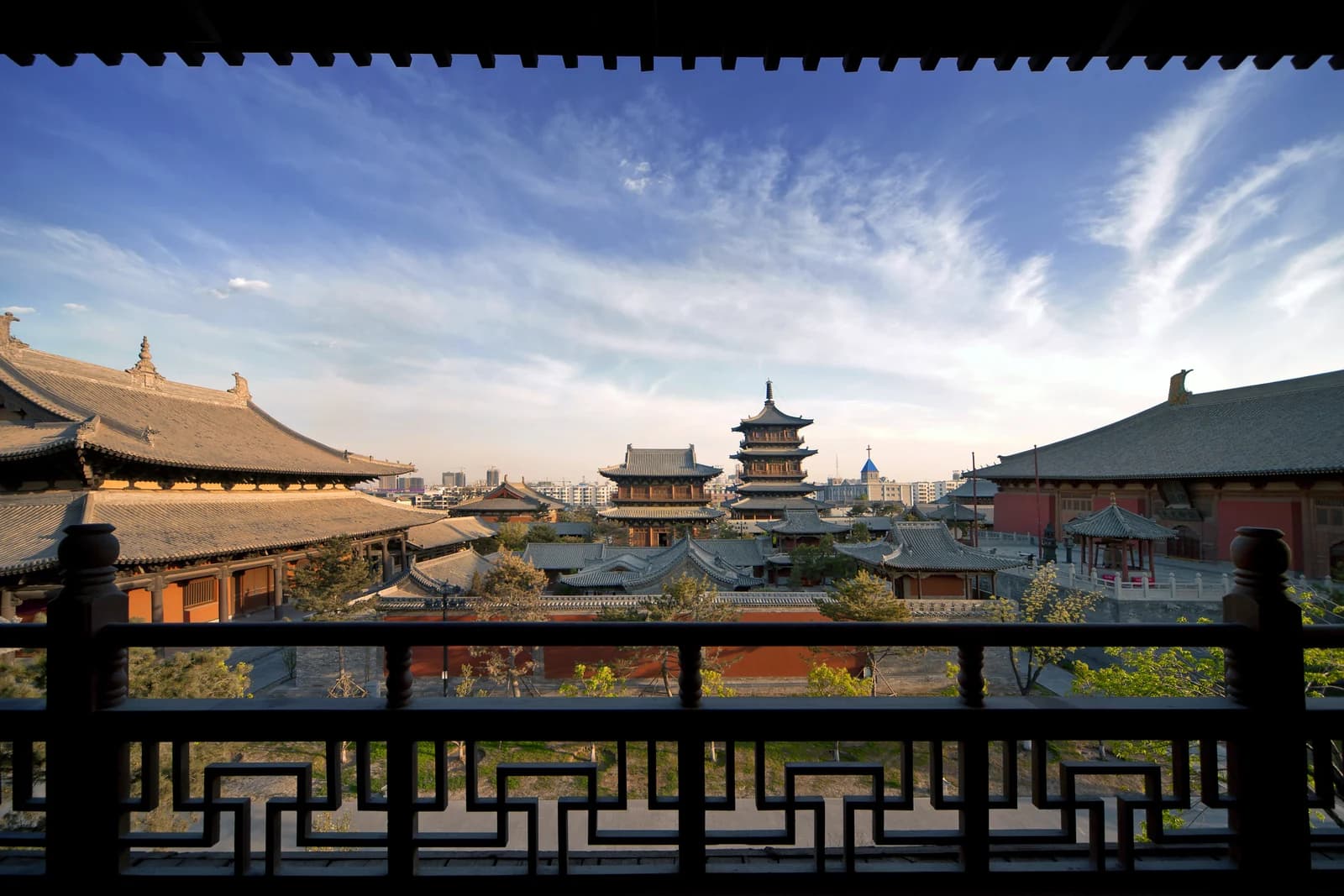
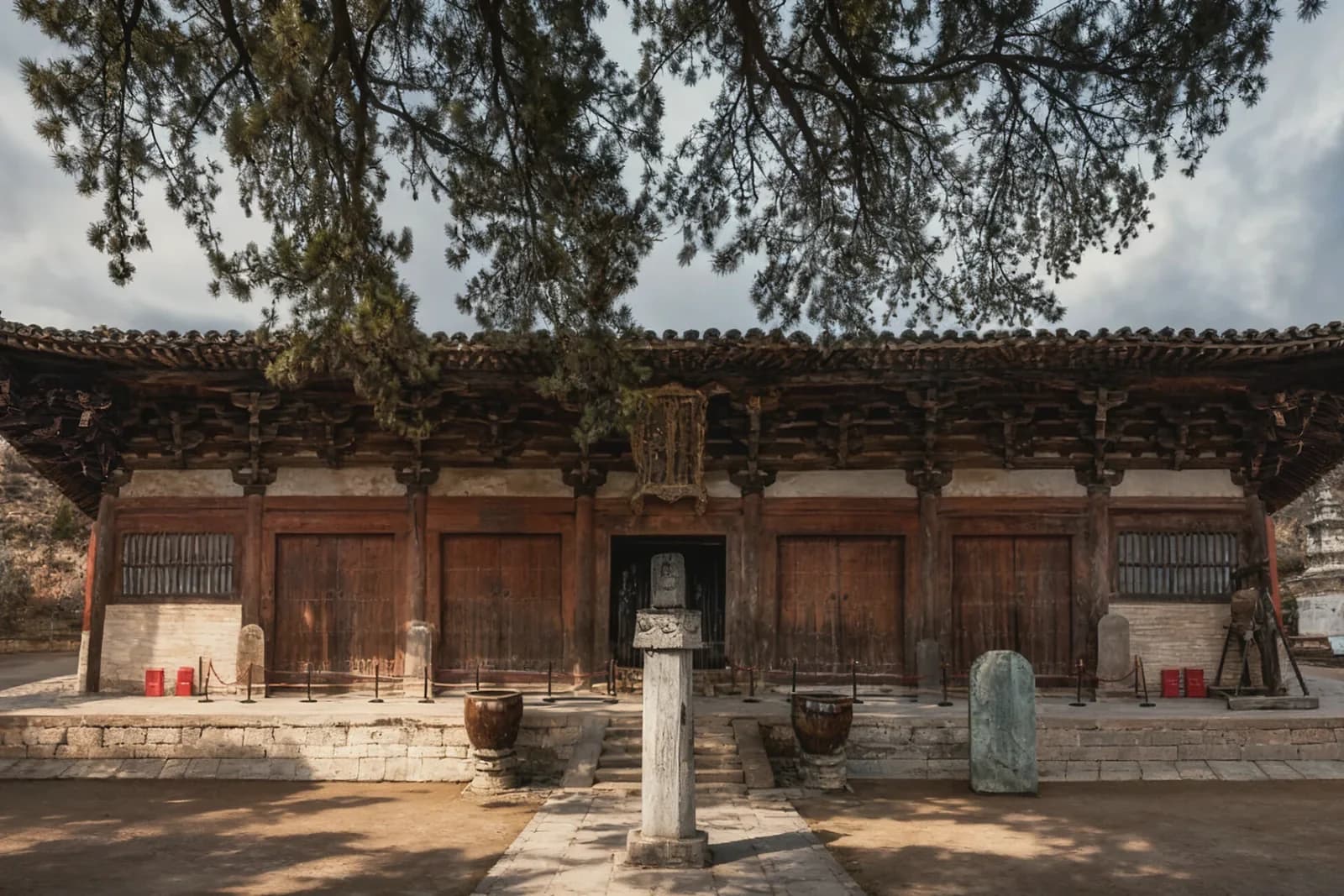
Located in northern China, Shanxi preserves one of the largest and most complete collections of ancient buildings in the country. From Tang Dynasty wooden halls such as <strong>Foguang Temple East Hall</strong> and <strong>Nanchan Temple Main Hall</strong> to the ancient city of Pingyao and the grand courtyard residences of Shanxi merchants, the province offers an extraordinary record of Chinese architectural development spanning more than a thousand years.
But why did so many ancient buildings survive in Shanxi?
The answer is not a single historical event. Instead, Shanxi's architectural heritage is the result of a unique combination of geography, historical development, religious traditions, economic power, and advanced timber construction techniques.
Today, Shanxi is not simply a place with old buildings. It is a <strong>living archive of Chinese architecture</strong>, where the evolution of Chinese building traditions can still be experienced through real structures, landscapes, and communities.
Ancient Buildings That Define Shanxi's Heritage
Before understanding why Shanxi preserved so many ancient buildings, it is important to understand the scale of this heritage.
| Ancient Building | Dynasty / Period | Date | Why It Matters |
|---|---|---|---|
| Nanchan Temple Main Hall | Tang Dynasty | 782 CE | One of the earliest surviving wooden buildings in China |
| Foguang Temple East Hall | Tang Dynasty | 857 CE | A masterpiece of Tang Dynasty timber architecture |
| Zhenguo Temple | Northern Han / Song period | 963 CE | Preserves rare early wooden structures and sculptures |
| Huayan Temple | Liao Dynasty | 1038 CE | Represents the high achievement of Liao Buddhist architecture |
| Pingyao Ancient City | Ming–Qing Dynasties | 14th–19th century | One of China's best-preserved traditional urban landscapes |
These buildings are more than historical monuments. They are physical records of Chinese craftsmanship, religious beliefs, social organization, and architectural innovation.
1. Geography: A Landscape That Protected Ancient Buildings
One of the most important reasons for Shanxi's architectural survival is its geography.
Shanxi is located on the Loess Plateau and surrounded by mountain ranges, including the Taihang Mountains to the east and the Lüliang Mountains to the west. This landscape created a relatively protected environment compared with many rapidly developing regions in eastern China.
Unlike coastal areas that experienced repeated cycles of urban reconstruction and modernization, many parts of Shanxi maintained traditional settlements and historical landscapes for centuries.
This does not mean that Shanxi was isolated from history. On the contrary, the province was located at an important intersection between the Central Plains, northern frontier regions, and ancient trade routes.
However, its geography reduced the pressure of large-scale redevelopment, allowing many temples, villages, and residential complexes to retain their original forms.
This combination of historical importance and geographic protection helped Shanxi become one of the most valuable regions for studying ancient Chinese architecture.
2. A Cultural Crossroads for Thousands of Years
Shanxi's architectural heritage cannot be separated from its historical position.
For thousands of years, the region connected different cultural and political worlds. It served as a bridge between the agricultural heartlands of China and the northern frontier.
During the Tang Dynasty (618–907), Shanxi became an important cultural region of the empire. Buddhism flourished, and many temples were built throughout the province.
Among them, <strong>Foguang Temple East Hall</strong>, constructed in 857 CE, is one of the earliest surviving timber structures in East Asia.
Architectural historian Nancy Shatzman Steinhardt's research on early Chinese architecture demonstrates how surviving buildings from Shanxi provide essential evidence for understanding the development of Chinese timber-frame construction.
Unlike written records, these buildings allow researchers to directly study: structural systems, wooden joints, roof design, spatial organization, and decorative techniques.
For architectural historians, Shanxi's ancient buildings are not only monuments. They are primary historical documents.
3. Religious Traditions Preserved Architectural Knowledge
Another major reason Shanxi has so many surviving ancient buildings is the continuous development of Buddhism and Taoism.
Religious buildings often had a different relationship with time compared with ordinary structures. Temples and monasteries were not simply physical spaces; they were cultural institutions maintained by generations of monks, communities, and local believers.
These places preserved not only architecture but also: Buddhist sculptures, murals, ritual spaces, craftsmanship traditions, and historical documents.
Important examples include: Foguang Temple, Nanchan Temple, Huayan Temple, Chongfu Temple, and Zhenguo Temple.
Research by Tracy Miller on the ritual architecture of Jinci Temple in Taiyuan shows how religious architecture in Shanxi functioned as a record of local identity, political authority, and cultural continuity.
Through these buildings, we can understand not only how people built structures, but also how they understood their relationship with religion, society, and history.
4. Merchant Wealth Created a Second Architectural Golden Age
Architecture survives when communities have the resources to build and maintain it.
During the Ming (1368–1644) and Qing (1644–1912) dynasties, Shanxi became one of China's most important commercial regions.
The famous <strong>Shanxi merchants (晋商)</strong> developed extensive trade networks across China and accumulated significant wealth. Their economic success transformed the architectural landscape of the province.
They built: large family compounds, ancestral halls, temples, commercial streets, and defensive residences.
The ancient city of Pingyao is one of the best examples.
Listed as a UNESCO World Heritage Site, Pingyao preserves a complete traditional Chinese county city layout, including city walls, streets, residences, shops, and religious buildings.
UNESCO describes Pingyao as an outstanding example of a traditional Chinese city that reflects the development of urban planning and architecture from the Ming and Qing periods.
Beyond Pingyao, many Shanxi merchant compounds reveal another side of Chinese architectural history: not imperial power, but the ambitions and values of China's commercial families.
5. Timber Technology Made Long-Term Survival Possible
Chinese traditional architecture was primarily built with timber, creating both challenges and opportunities.
Unlike stone architecture in Europe, wooden buildings require continuous maintenance. However, Chinese craftsmen developed highly sophisticated timber construction techniques that allowed buildings to survive for centuries.
These techniques included: modular timber framing, flexible wooden joints, repairable structural components, complex roof systems, and advanced bracket structures (dougong).
Because wooden structures could be repaired rather than completely rebuilt, many ancient buildings continued to exist through different historical periods.
Shanxi's surviving temples provide some of the best examples of this architectural system and continue to influence modern research on conservation and heritage preservation.
Why Shanxi's Ancient Buildings Matter Today
| Factor | How It Helped Preserve Architecture |
|---|---|
| Geography | Mountains and lower redevelopment pressure protected historic landscapes |
| Religion | Temples preserved architecture, art, and craftsmanship across generations |
| Commerce | Shanxi merchants funded residences, temples, and public buildings |
| Timber Technology | Advanced construction methods allowed repair and long-term survival |
| Local Communities | Continuous maintenance protected living heritage |
Shanxi's ancient buildings are not simply old structures.
They are historical documents made of wood, stone, and craftsmanship.
A single temple can reveal information about: ancient engineering, religious beliefs, artistic development, social organization, and economic history.
For architects, historians, and cultural travelers, Shanxi offers something rare: the opportunity to experience Chinese architecture not as a reconstructed museum display, but as a living historical landscape.
While landmarks such as the Forbidden City represent imperial power, Shanxi reveals another story — the architecture of temples, villages, merchants, craftsmen, and communities that continued across centuries.
Conclusion: Where Chinese Architecture Can Still Be Read
The reason Shanxi preserved so many ancient buildings is not simply because of luck.
Its mountains provided protection. Its history created cultural importance. Its religions maintained continuity. Its merchants supported construction. Its craftsmen developed durable architectural traditions.
Together, these factors transformed Shanxi into one of the world's most important archives of ancient architecture.
To understand Chinese architecture, it is not enough to visit famous monuments. One must also walk through Shanxi's temples, villages, and historic towns — places where architectural history is not only preserved, but still visible and alive.
References
Steinhardt, Nancy Shatzman. <em>Liao Architecture</em>. Honolulu: University of Hawaii Press, 1997.
Miller, Tracy. <em>The Divine Nature of Power: Chinese Ritual Architecture at the Sacred Site of Jinci</em>. Cambridge: Harvard University Asia Center, 2007.
Liang Sicheng. <em>A Pictorial History of Chinese Architecture</em>. Dover Publications, 1984.
Liu Dunzhen. <em>History of Chinese Ancient Architecture (中国古代建筑史)</em>. China Architecture & Building Press, 1980.
UNESCO World Heritage Centre. <em>Ancient City of Ping Yao</em>. https://whc.unesco.org/en/list/812/